
Hair Transplant Cost in Thailand (2026): What My 4,300 Graft Hair Transplant Really Cost
If you've been researching the cost of a hair transplant in Thailand, you've probably run into the same problem I did: the information is everywhere, but rarely in one place. I was jumping between Reddit posts, hair transplant forums, YouTube videos, clinic websites and patient reviews, trying to piece everything together. I ended up spending close to a year researching my own hair transplant.
Questions like… How much does the surgery actually cost? What's included? How many grafts will I need? How much should I budget for flights and accommodation? Are the cheaper clinics actually good? And probably the biggest question of all, how do you know you're choosing the right doctor?
I eventually had a 4,300 graft FUE hair transplant at Absolute Hair Clinic in Bangkok in November 2024 with Dr Ratchathorn Panchaprateep, MD, PhD, FISHRS.
The procedure itself cost me approximately 344,000 Thai baht, or around AUD $14,500 at the time.
And yes, I know… that's definitely not the cheapest hair transplant you can find, especially for Thailand and Turkey.
But price eventually became a secondary consideration for me and you will understand why after reading this article. After spending a year looking through actual patient results, I decided that if I was going to do this, I wanted to give myself the best chance of getting it right the first time.
I'll be breaking down what I actually paid for my hair transplant in Thailand, what was included in that price, what I spent on flights, accommodation and recovery and the costs I think people sometimes overlook when they're budgeting for a procedure overseas.
Hopefully it'll save you some of the ridiculous amount of research I did before mine.
How much did my hair transplant in Thailand cost?
I had 4,300 grafts transplanted at 80 baht per graft (2024 price), bringing my surgery cost to approximately 344,000 baht (around AUD $14,500 at the time).
My procedure was a fully shaved FUE (Follicular Unit Extraction).
Around 3,000 grafts were used for my frontal area through to my mid-scalp, with another 1,300 grafts going into my crown. I was roughly a Norwood 5 to 6 by the time I had the procedure, so this wasn't a small procedure.
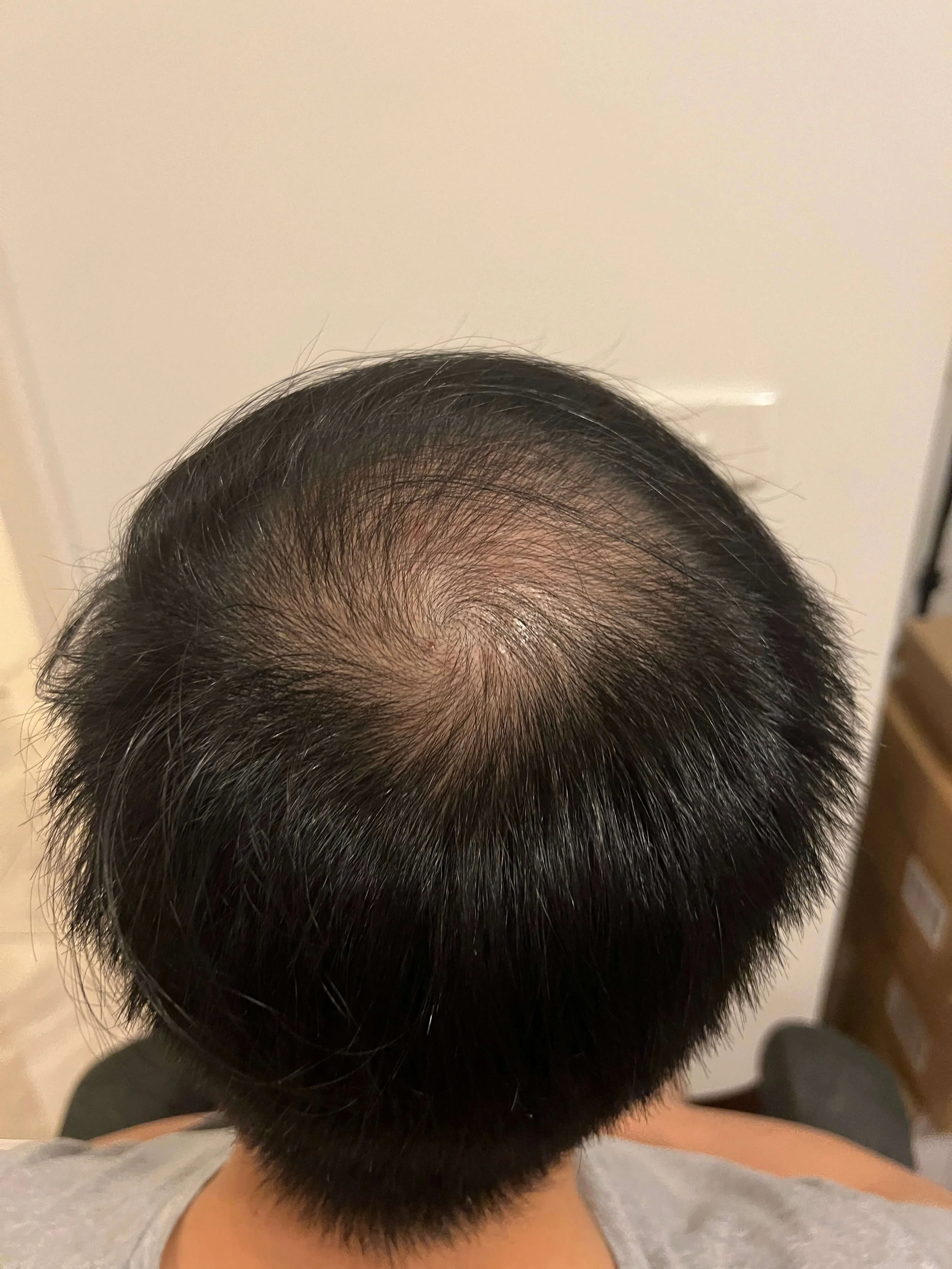
The pre-transplant photo I sent to Dr Ratchathorn for an initial assessment of my Norwood stage and estimated graft count.
One thing worth explaining if you're new to all this. A graft isn't the same as a single hair.
A graft can contain multiple hairs, so when a clinic quotes you 3,000 or 4,000 grafts, they're not talking about 3,000 or 4,000 individual strands of hair.
This confused me when I first started researching hair transplants and it's important because many clinics calculate their prices based on the number of grafts required.
My approximate cost breakdown
Hair transplant
~344,000 THB / AUD $14,500
Grafts
4,300
Price per graft
80 THB
Flights from Australia
~AUD $1,000 return
Hotel
~AUD $150 per night
Stay
10 nights
Extra post-op care
~AUD $20 per additional day
Food
Roughly AUD $5–15 per meal
Local transport
Roughly AUD $10–20 for a 30-minute Grab/Bolt ride
These were my costs in November 2024, so don't treat them as a current quote from the clinic. Exchange rates and clinic prices do change and I believe the clinic's graft pricing has increased since I had my procedure.
What I think is more useful is seeing where the money actually went and what I got for it.
Why did I pay that much for a hair transplant in Thailand?
This is probably the obvious question.
Thailand isn't necessarily dirt cheap when it comes to hair transplants, particularly if you're looking at some of the more established surgeons.
When I was researching, I found quite a wide range of prices between clinics. Depending on where you go and what you're having done, you could be looking at somewhere around AUD $5,000–$10,000 and potentially more at the higher end.
I ended up towards the expensive end.
I was okay with that, even though it took me a long time to save up for this procedure.
Initially, cost was definitely part of my decision. It's hard for it not to be when you're talking about spending five figures on your hair.
But the deeper I went into my research, the less I wanted price to decide who operated on me.
A hair transplant isn't something where I personally wanted to shop for the cheapest deal.
You're working with a very limited donor area. The hair that's taken from the back and sides of your head isn't an unlimited resource that magically grows back if the transplant goes badly.
There are also so many things happening during the procedure that can affect the final result, such as how your donor area is managed, the hairline design, how the grafts are extracted, how they're handled outside the body, how they're placed and the direction and density they're implanted at.
I eventually reached the point where my thinking became pretty simple:
Quality first. Cost second.
Obviously, that doesn't mean you should spend beyond what you can afford or assume that the most expensive surgeon is automatically the best.
It means that once I had decided to do something this permanent, saving a few thousand dollars wasn't worth choosing a doctor I had less confidence in.
Why I chose Thailand instead of Turkey or Australia
My first preference actually wasn't Thailand.
It was Turkey.
If you've spent any time researching hair transplants, you'll know why. Turkey is probably the country most people immediately associate with getting a hair transplant overseas. There are some reputable surgeons there and plenty of people have had excellent results based on what I see on social media and their “amazing marketing campaigns”.
But the more I researched, the more uncomfortable I became with what I was seeing, but that was just my personal opinion.
I spent months going through real patient experiences on Reddit and hair transplant forums rather than relying solely on clinic marketing. One concern that kept coming up was the growth of high volume clinics (usually referred to as "hair mills") where technicians may perform large parts of the procedure and clinics can be handling multiple patients in a day.
That doesn't mean Turkey = bad hair transplant. I don't think that's fair at all.
There are excellent doctors in Turkey.
My concern was that, as a first time patient trying to work out who I could trust, I personally felt the risk of choosing the wrong clinic was getting harder to navigate.
Thailand gradually became much more appealing to me.
Thailand already has a strong reputation for medical and cosmetic procedures and after looking at the work coming out of several clinics there, I became particularly interested in the natural looking hairlines and results I was seeing, especially as I am of Asian descent, so I paid quite a lot of attention to results from patients with hair characteristics and hairlines that were closer to mine. That became another factor in my decision.
To my surprise, even my dermatologist in Australia had suggested that I consider going overseas for the procedure. Her view was that doctors who perform hair transplants at a much higher frequency naturally build a huge amount of experience doing them.
That stuck with me.
Eventually I decided that Thailand was where I felt most comfortable having mine done.
Why I chose Absolute Hair Clinic and Dr Ratchathorn
This deserves its own article because there was a lot more research behind this decision than I can reasonably put here.
The short version is that I eventually narrowed my search in Thailand down to two clinics: Hairtran Clinic and Absolute Hair Clinic.
Hairtran was considerably cheaper at the time and I saw plenty of good results from Dr Patty. I was honestly very tempted to go with Dr Patty and Hairtran Clinic as their cost was way cheaper than Absolute Hair Clinic (I’m talking about 3x cheaper!)
But the results I was seeing from Absolute Hair Clinic kept pulling me back.
I was particularly interested in higher Norwood cases because that was much closer to my situation. I wasn't looking for someone to fill in a slightly receding hairline, which Hairtran seems to excel in.
I had fairly advanced male pattern baldness and needed work across a large area. Absolute Hair Clinic seemed to be more consistently producing the sort of density and results I was hoping for.
When I contacted the clinic through WhatsApp, I ended up speaking directly with Dr Ratchathorn.
I actually knew far less about her at the time than Dr Laorwong, so I went away and did another round of research before committing. After looking into Dr Ratchathorn’s credentials and medical pedigree, I decided I wanted to go with Dr Ratchathorn instead.
By the time I eventually arrived in Bangkok and had my face-to-face pre-surgery consultation with her, that was probably the moment I finally thought:
Okay. I think I made the right choice.
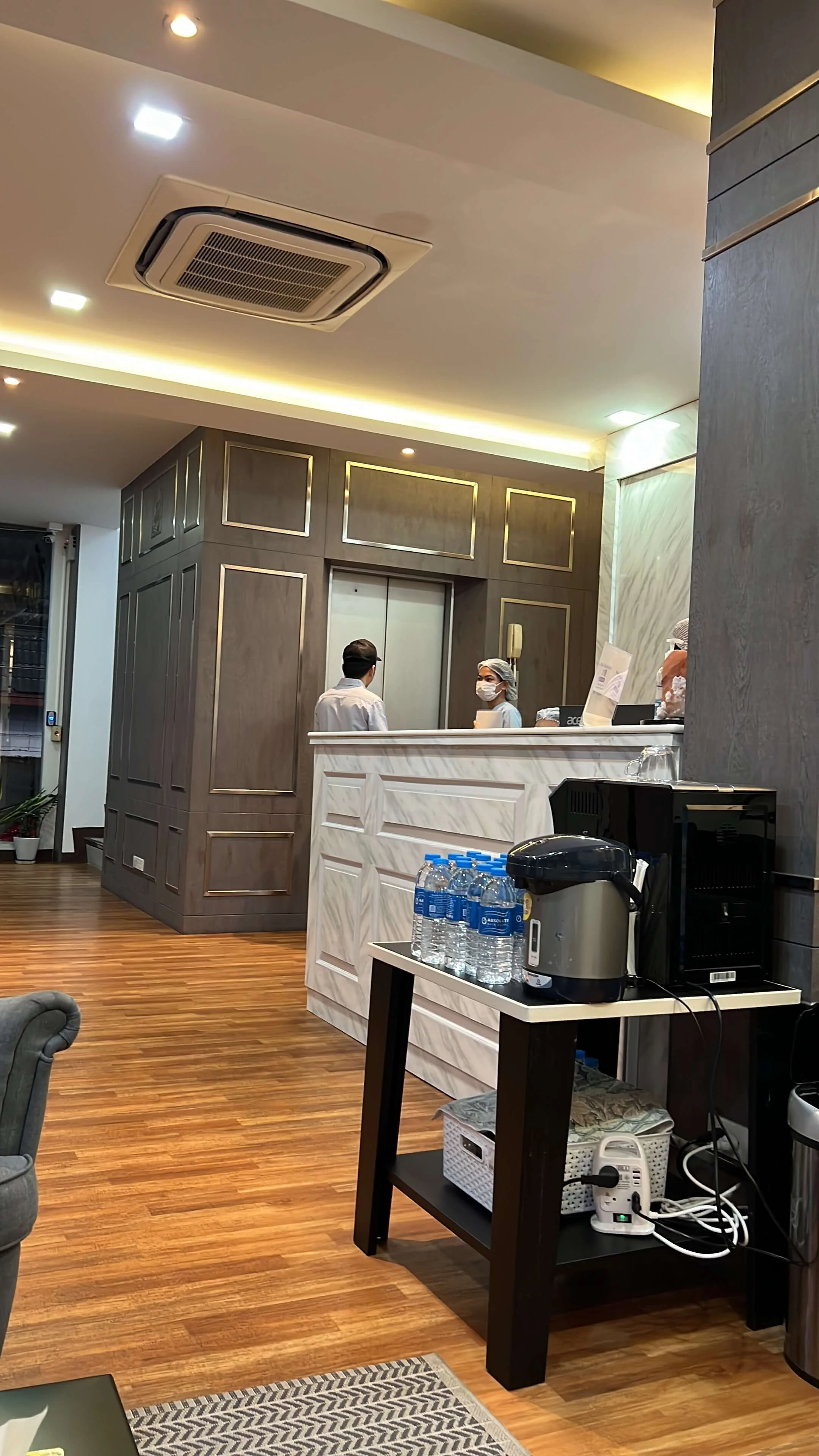
During my pre-surgery consultation at Absolute Hair Clinic, the day before my procedure.
She knew exactly what she wanted to do with my hair, where the grafts needed to go and what was realistically achievable with the donor area I had available. She’s a real artist with the way she designed my hairline.
That consultation took away a lot of the anxiety I had been carrying around for years.
And there was a lot of it…
What was actually included in the 344,000 baht?
This was one of the things that surprised me.
When you first see the surgery price, it's easy to look at it as purely the cost of moving 4,300 grafts from one part of your head to another. I would also question if there was any hidden cost with it.
But after going through the procedure myself, there is an art to the whole process. Your final results are usually determined by how the doctor manages your donor area, how your grafts are being selected and placed in a direction that will look natural and feathery at the front hairline, and how well the doctors and technicians work together to make the surgery a success.
There was actually a lot of aftercare included in what I paid.
The total cost included things such as:
PRP (platelet-rich plasma) during the procedure
Pre and Post-operative medication
Antibiotics
Pain relief
Medication to help with sleeping
Antihistamines for itching
Wound care
Hair washing
Five consecutive days of post-operative care
Low-level light/laser therapy (Healite) treatment
Oxygen chamber treatment as part of my initial recovery care
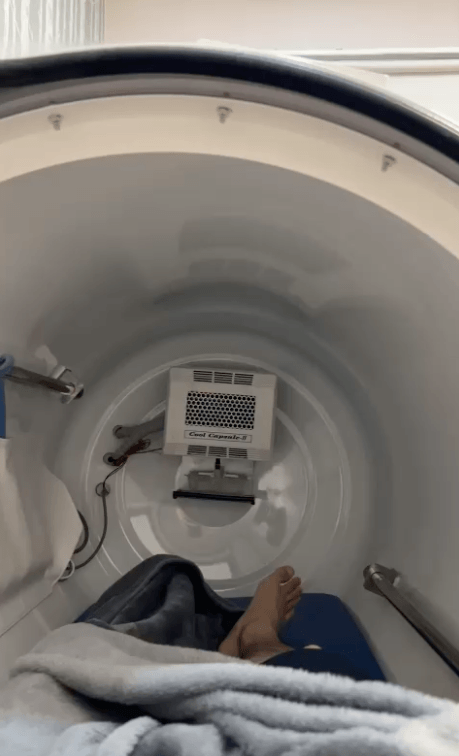
A photo of me inside the Oxygen Chamber treatment
The daily aftercare was something I appreciated much more once I actually had the surgery.
For those first few days, the nurses handled the washing and cleaning of my scalp, including carefully removing dried blood and debris around the recipient area. Cream was applied afterwards and my scalp was checked as I went through recovery each day. They also replaced my bandana daily after the hair wash and cream medication.
Having someone experienced dealing with my scalp every day instead of standing in a hotel bathroom wondering whether I was about to accidentally knock out a graft was incredibly reassuring.
I ended up paying to extend some of my post-operative care because I was staying in Bangkok longer anyway.
It cost me roughly another AUD $20 per day (after the 5 days free included care) for the additional daily care I chose.
If I had to do it again, I would actually stay longer in Bangkok post-op and extend the aftercare even longer.
Flights: around AUD $1,000 return
I get this question a lot and I just want to say that Flight costs are very subjective.
I flew from Australia to Bangkok and paid around AUD $1,000 to Bangkok direct with Thai Airways.
Flights are obviously going to be completely different depending on where you're travelling from, when you book and what class you fly.
For my return flight to Melbourne, I opted to fly Business class for a more comfortable flight experience and more importantly, the space to rest as the wounds are still very raw and I also still had my bandana on.
One thing I would change though if I did it again is arriving in Bangkok a little earlier.
I think having a few days to settle into Bangkok, adjust to the weather, get comfortable with the area and just mentally prepare would have made the lead up to surgery even easier.
Accommodation: around AUD $150 per night
The clinic had a few hotel recommendations nearby, but some of them looked a little dated to me.
I knew I was going to spend quite a lot of time in the room after surgery, so I stayed at Saan Hotel, a new hotel that’s around a 10-minute walk from Absolute Hair Clinic and roughly the same distance from IconSiam.
I paid around AUD $150 per night and deliberately booked a more spacious room.
That turned out to be one of my better decisions.
You're not bedridden after a hair transplant, but you're also probably not going to spend your first few days walking around Bangkok sightseeing from morning until midnight under the scorching sun and humid weather.
Having a room I actually enjoyed being in made the recovery period much more comfortable.
The location also made getting back to the clinic for my daily post-op care incredibly easy.
The doctor had recommended staying in Bangkok for at least six days. But I stayed for 11 nights in total because we had already flown all the way from Australia and wanted to give myself plenty of recovery time and take the opportunity to explore Bangkok.
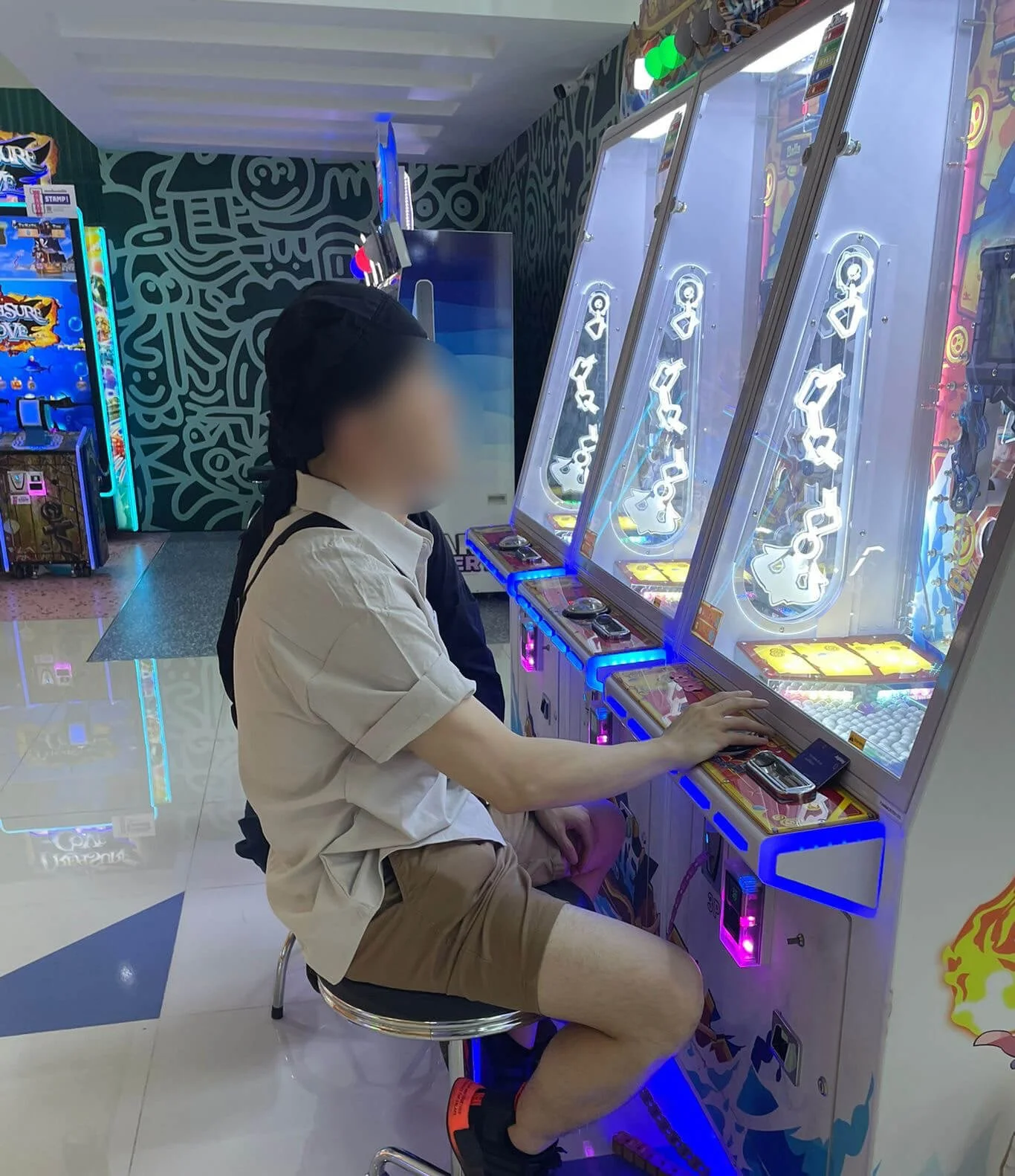
Post transplant recovery exploring Bangkok while missus is shopping
If I did it again?
I would probably stay even longer!
Food and transport were relatively cheap
This is where Thailand starts to offset some of the higher surgery cost.
Food can be incredibly affordable depending on where you eat.
A normal meal around IconSiam might cost roughly AUD $15, while eating somewhere more local could easily bring that closer to AUD $5.
I wasn't particularly adventurous with food immediately after surgery. The last thing I wanted after spending AUD $14,500 on my head was to give myself food poisoning because I wanted to save $4 on lunch.
My doctor also advised me to avoid things such as spicy food and seafood during the early recovery period, so I kept things fairly simple.
For getting around Bangkok, I mainly booked through Grab and Bolt.
Grab was often more expensive, sometimes around AUD $20 for a roughly 30-minute trip, while Bolt could be closer to AUD $10 for a similar journey.
I normally checked both.
The good thing about staying near the clinic was that transport wasn't a major part of my budget anyway.
Were there any hidden costs?
Honestly, not really.
And I think that's worth mentioning because "medical procedure overseas" naturally makes you wonder whether you're going to arrive and suddenly discover another $2,000 worth of things you weren't told about.
That wasn't my experience.
The clinic was upfront about the pricing and I knew what I was paying for before the procedure, with the deposit paid upon securing an appointment over Whatsapp.
The additional post-operative care I paid for was my choice rather than something sprung on me afterwards. The reason why I went for additional post-op care was because I had such a fantastic experience in the first 5 days and felt really well taken care of.
The bigger "hidden costs" are really the obvious things people sometimes forget to include when comparing prices online:
Flights. Hotel. Food. Transport. Extra recovery time.
If you're comparing a quote in Thailand with a quote from a clinic in another country, don't compare surgery price against surgery price only.
Compare the whole trip.
At the same time, also compare what's actually included in the surgery price.
A cheaper quote isn't necessarily cheaper once you've added everything back in.
So, was spending AUD $14,500 on my hair transplant worth it?
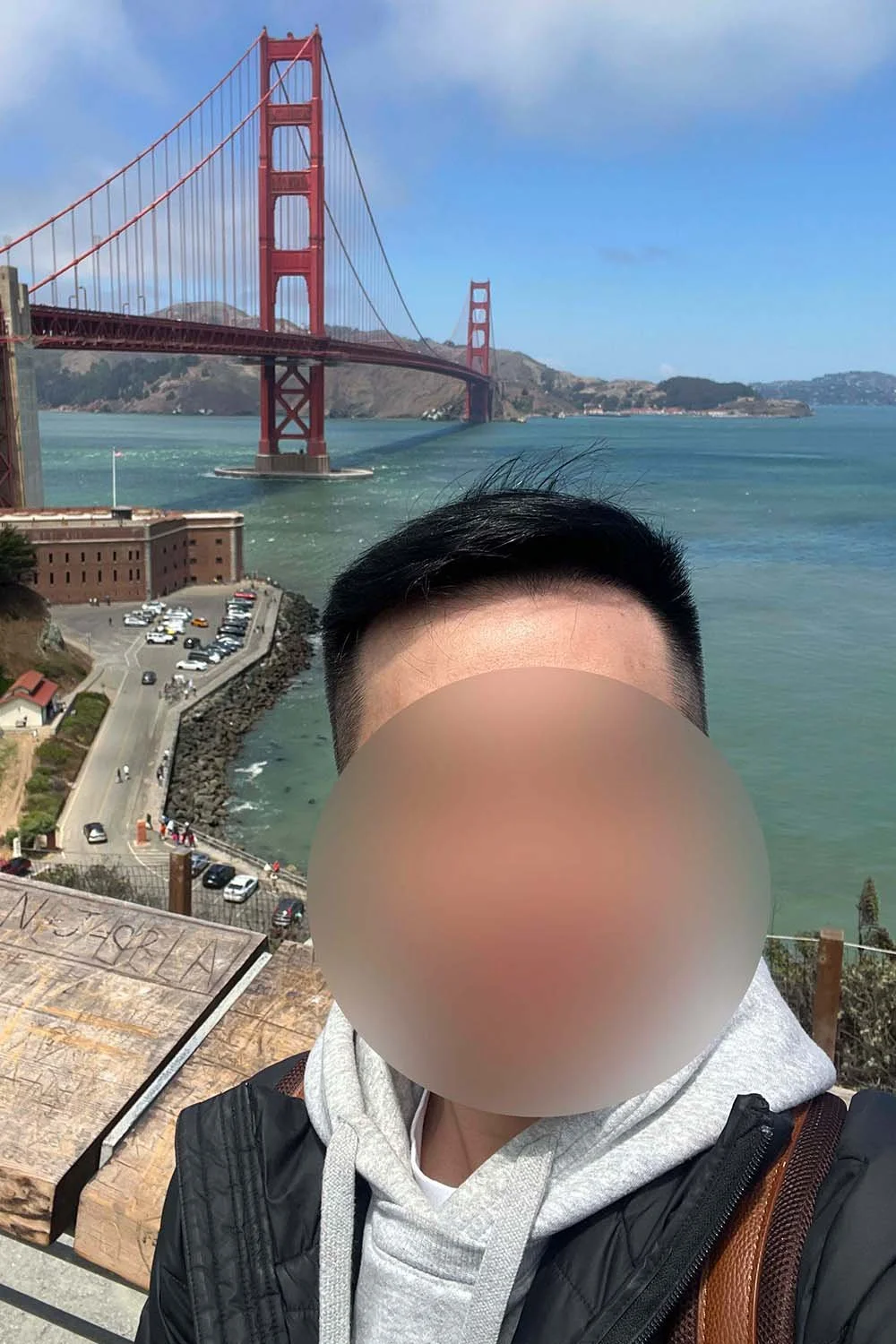
During a recent work trip in San Francisco, 9 months post surgery
For me, a 100% yes.
And that's not because everything was magically perfect or because I think everyone with hair loss should immediately book a flight to Bangkok.
It's because of how much hair loss had already taken from me.
If I had to describe myself before my transplant in three words, they would probably be:
Insecure. Insecure. Insecure.
It affected almost every part of my life more than I liked to admit.
I worried about people standing behind me and noticing my thinning crown. I spent ridiculous amounts of time styling my hair and using fibres to disguise the areas I had lost.
There were work situations, social events and opportunities I avoided because I was worried about how my hair looked, or not being able to wear a cap/casual wear to the office.
Even travelling could become stressful as I can’t wear a cap when passing through customs and it led to always spending so much time getting my hair right before leaving for the airport.
The transplant didn't turn me into a different person.
It just removed an insecurity that had been on my mind every single day for years.
I can now leave the house without worrying about someone noticing my thinning crown. I no longer have to plan around whether I can wear a cap, or spend an hour trying to hide my hair loss just to go about my day.
That's what I actually paid for.
Looking back, my biggest regret isn't spending AUD $14,500.
It's that I waited until my late 30s to finally do it.
Would I choose Thailand again?
Yes.
If one of my friends came to me today with the money saved and asked where I would start looking, Thailand would absolutely be near the top of my list.
I would personally choose it over simply staying in Australia for convenience and based on what I saw during my own research, I would also choose it over Turkey.
But I don't want you to read that as:
"Go to Thailand and you'll get a good hair transplant."
That's not what I'm saying.
The country doesn't perform your surgery.
The doctor and their team do.
Thailand will have good clinics and bad clinics, just as Turkey, Australia, the US and everywhere else will.
My advice is to look past Instagram followers, clinic marketing and ridiculously cheap package deals.
Look at actual patient results.
Find people with a similar level of hair loss and hair characteristics to you.
Look at the donor area as well as the hairline.
Find out who actually performs each part of the procedure (i.e how much of the procedure is done by the doctor vs technicians).
And take your time.
It took me almost a year.
That might be excessive, but I would rather spend a year researching something that will be on my head for the rest of my life than rush just because one clinic is offering a discount this month.
One important thing before you start comparing prices
A hair transplant shouldn't necessarily be the first thing you do when you notice hair loss.
I had already been using finasteride and minoxidil for around 10 years before my transplant and I had spoken with my dermatologist about my hair loss well before I eventually went ahead with surgery.
A transplant moves existing hair.
It doesn't automatically stop the rest of your non-transplanted hair from continuing to thin.
That's why I strongly recommend speaking with a qualified doctor or dermatologist about your hair loss and whether it has stabilised before deciding on surgery.
Personally, I wouldn't recommend rushing into a transplant if you haven't even explored the underlying hair loss first.
Final thoughts
If you've made it this far, you're probably doing what I did a few years ago, which is opening twenty tabs, reading Reddit at midnight and trying to work out who you can actually trust with your hair.
I get it.
The best advice I can give you is not to rush.
My hair transplant cost more than I had originally hoped to spend. I had to save for it, I nearly backed out plenty of times and my fear of needles certainly didn't help. I had heard enough stories about those local anaesthetic injections to scare myself long before I ever sat in the chair.
But once I decided this was something I wanted to do, I stopped trying to find the cheapest way to do it.
I tried to find the option I trusted most within what I could afford.
That's still how I would approach it today.
Hair To Freedom exists because I remember how fragmented all of this information felt when I was researching mine. I learned from Reddit, forums, YouTube, doctors and other patients and a lot of strangers sharing their experiences helped me make my own decision.
This is my way of paying some of that forward.
I'll be documenting the rest of my experience here too, from how I chose my doctor, what recovery was actually like, the things that worried me before surgery, and what my results looked like month by month.
Hopefully, it'll make your own research a little easier than mine was.
